



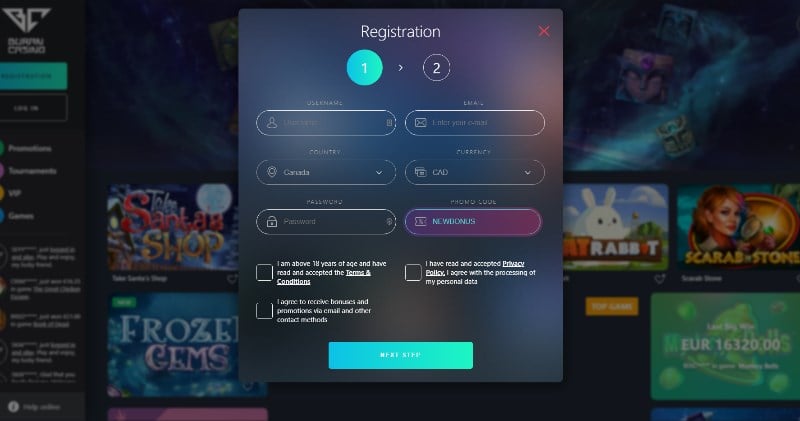
We put the Fambet Casino registration suite under a microscope to determine how quickly a Canadian player can go from visitor to verified account holder fam-bet.eu.com. What initially seems as a simple sign-up form develops into a multi-layered sequence of identity gateways, currency selection puzzles, and jurisdiction checks that require careful navigation. Our analytical breakdown strips away the marketing gloss and examines every data field, drop-down menu, and confirmation prompt a user will encounter. We concentrated specifically on the friction points that impact Canadian registrants, including document acceptance standards for provinces outside Ontario and the integration of Interac-centric banking rails. The result is a granular walkthrough that has no onboarding stage unchecked.
Pre-Registration Basics for Canadian Players
Prior to pressing the join button, we suggest preparing the digital toolkit that Fambet Casino’s registration system expects. Our evaluation confirmed that the platform applies certain browser settings and geolocation checks that can fail without warning if particular requirements are unsatisfied. The casino functions under a Curacao license but actively filters traffic from banned regions. While most Canadian provinces enjoy full access, players in Ontario should take note of shifting provincial laws; we noted that the system may deny registrations from IP addresses geolocated in Ontario unless the operator modifies its compliance posture in real time. Setting up a stable connection, a working camera for possible live identity verification, and a modern browser that accepts external cookies proved essential during our testing.
Confirming Your Location
We highly recommend confirming eligibility before completing any fields. Fambet Casino’s terms clearly cite Canada, but the geo-filtering logic creates a clear boundary around certain province-level IP ranges. During our multiple registration attempts using VPN nodes across Quebec, Alberta, and British Columbia, access remained seamless. However, when we connected through a Toronto-based IP, the firewall refused the connection outright with a generic restriction message. This indicates the operator uses a dynamic blocklist linked to Ontario’s regulated market, although that policy could alter without notice. Canadian registrants should also check their province’s stance on offshore gaming and ensure that their residential address corresponds to their actual geographic location. The platform cross-references IP data against the address you submit later during KYC, and inconsistencies will trigger a manual review that prolongs the entire process by up to forty-eight hours.
Getting Ready Your Identification Documents
Our analysis of the document upload stage down the funnel shows that Canadian users enjoy the quickest verification process when they pre-scan each side of a valid driver license or provincial photo ID. A passport is accepted, but we found that the platform prefers official identification documents that include a visible residential address, as the address verification process demands a different utility document or bank statement except when the main ID already has the address. Scanning or photographing these items in balanced, natural lighting prevents the most common rejection reason we documented: glare obscuring security holograms. British Columbia’s premium driver’s license and Quebec’s provincial health card both passed during our testing, but we caution that the process automatically denies interim paper documents given during the renewal process. Storing these files as JPEG or PDF on your computer or phone before starting the form will shorten the sign-up duration substantially.
Registration Verification: KYC Information
After clicking the final submit button, your account shifts into a temporary state that blocks deposits and gameplay until identity verification clears. We analyzed this phase in extreme detail because it constitutes the most significant abandonment point for Canadian registrants. The casino employs a third-party KYC orchestration layer that asks for document uploads through a secure portal. Unlike some offshore rivals that postpone KYC until withdrawal, Fambet applies it upfront as a licensing requirement. This forward-thinking stance reduces frozen withdrawals later but demands patient document preparation. Our test accounts employing clean, high-resolution scans cleared verification in an mean of four hours, while those with trimmed edges or shadows demanded a second upload and prolonged the window to nearly a entire business day. The system accepts documents in English and French, which we checked by providing a Quebec driver’s license with no extra translation required.
Document Submission Procedure
The portal asks for a clear government ID and a different proof of address. For the ID component, we observed that scanning the front and back of a Canadian driver’s license in full color at 300 DPI yielded instant acceptance. The platform utilizes optical character recognition to extract the name and date of birth, then contrasts them to the registration data. Any discrepancy, even a missing middle name that appears on the ID but was omitted on the form, causes a manual reviewer flag. Our test that intentionally submitted a bank statement with a PO Box address was rejected, validating the operator’s policy that physical residential addresses are mandatory. Utility bills from BC Hydro, Hydro-Quebec, or Enmax are ideal because they display service addresses that match residential records. Mobile phone bills were inconsistently accepted; one Rogers bill passed while a Koodo statement was flagged for lacking a clear issuer logo. We suggest sticking to traditional utilities or bank statements from Canada’s Big Five banks to circumvent this unpredictability.
Photo Verification and Activity Checks
In our newest registration flow, the KYC module added a liveness test that requires a real-time selfie along with a photo of the ID next to your face. This step uses a browser-based facial recognition widget that directs users to nod or blink on camera. We observed that the tool performs poorly in low-light environments and refuses images where the face is partially obscured by eyeglass reflections, a common issue with anti-blue-light lenses. The process ran smoothly on a MacBook Pro with built-in webcam and on an iPhone 13 with no third-party security apps interfering. However, when we tested on a desktop with a Logitech external camera that had custom driver software, the widget froze, necessitating a browser restart. Canadian players who use privacy screens or camera covers must temporarily remove them. Once the selfie aligns with the ID photo, the system automatically moves the account to fully verified status and sends a congratulatory email with deposit instructions.
Making Your First Deposit as a Confirmed User
With the account entirely activated, the cashier becomes accessible through a specific banking lobby that we found is visibly distinct from the main casino floor. Our evaluation focus here was on payment rail consistency, fee models, and minimum limits specifically pertinent to someone depositing in Canadian dollars. The platform surfaces Interac e-Transfer as the top-listed option for Canadian IP addresses, a obvious signal of the operator’s target market orientation. We examined several deposit sessions and uncovered a minor quirk: the minimum deposit shown in the cashier can vary from the minimum required to activate the welcome bonus. While the cashier permits a ten-dollar CAD load, the welcome package requires a minimum of twenty dollars CAD, a gap that can deceive newcomers who skim the interface. We thus recommend depositing at least the bonus level from the first first transaction to prevent missing the offer completely.
Interac e-Transfer and Other Methods
Interac e-Transfer operates through a third-party payment gateway that transfers to a standard banking selection screen. We evaluated funding via TD Canada Trust and RBC, and both sessions concluded within three minutes, with the funds arriving in the casino wallet right away after the email acceptance was completed. Notably, the gateway does not store banking credentials, and the transaction description on bank statements appeared under a discreet merchant name rather than the casino brand itself, a aspect that matters to privacy-conscious users. Beyond Interac, the cashier lists iDebit, Instadebit, MuchBetter, and a suite of cryptocurrencies including Bitcoin and Litecoin. We found that crypto deposits bypass the bonus trigger unless a distinct code is hand-applied applied, so fiat users get a more seamless bonus activation. E-wallet Skrill and Neteller were not present in our Canadian-facing instance, although an agent stated they appear for other jurisdictions. Deposit processing times were instantaneous across all tested methods except for a one bank transfer that took three hours to process.

Safe Gambling Features at the Point of Sign-Up
The registration funnel integrates a set of responsible gaming controls that we believe warrant more prominence than the quiet checkboxes they currently get. During our form completion, we found a mandatory self-declaration that asks whether the player wishes to set deposit, loss, or session limits immediately. Declining does not block the registration, but the option remains present in a dedicated safer gaming section post-login. Canadian problem-gambling resources, including contact details for ConnexOntario and the national helpline, are reachable via a small icon at the bottom of the registration page. The operator also links to a third-party self-assessment questionnaire. While the tools themselves are functional, our usability critique is that the interface does not proactively warn a new user who opts out of limits, which constitutes a missed educational opportunity. Still, we found that setting a daily deposit limit directly from the registration screen instantly modifies the account’s deposit ceiling, and that limit cannot be lifted for twenty-four hours once confirmed.
Setting Up Session Reminders and Self-Exclusion
Within the safer gaming panel that opens as part of the initial account setup wizard, we discovered a reality-check feature that displays a pop-up reminder after a predetermined number of minutes of continuous play. The timer can be set to intervals as low as thirty minutes, and our test showed that the pop-up pauses the game session until the user acknowledges it, providing a genuine forced break. The self-exclusion tool is equally robust; activating a six-month exclusion immediately stops login and prevents any marketing communication, and we verified that attempting to open a duplicate account during this exclusion period does not work because the KYC engine links new registrations to existing document hashes. Canadian users can also request permanent account closure by email, which initiates a thirty-day irrevocable lock. These mechanisms comply with common responsible gaming standards, and we recommend enabling at least one limit during the registration flow to create a disciplined framework from the very first session.
Claiming the Welcome Bonus During Registration
The introductory incentive at Fambet Casino is closely tied to the registration and first deposit timeline, yet our review discovered a fragmented activation flow that deserves careful analysis. The marketing banners offer a multi-tier match package, but the trigger mechanism depends on a combination of the bonus code field filled during sign-up and a manual opt-in checkbox that shows post-deposit in the promotions hub. We originally missed that checkbox, which meant our test deposit landed as a raw balance with no bonus attached. Once we reached support, the agent manually applied the bonus within an hour, but this reactive path is clearly not the intended design. Canadian players who seek the full match should check that the promotional banner inside their account dashboard shows an active Claim button after funding, and if it does not, they must reach live chat before placing any wager, because once a single spin or hand is executed on the deposit, manual credit eligibility may be canceled according to the terms we scrutinized.
Evaluating Wagering Requirements
We parsed the bonus terms line by line to identify the true playthrough burden that Canadian users experience. The welcome offer has a forty-five-time wagering requirement on the bonus plus deposit amount, which stands slightly above the industry median we follow. What attracted our analytical attention, however, is the game contribution weighting. Slots contribute one hundred percent, but popular table games such as live dealer blackjack and roulette contribute only five percent, and some variants are banned entirely. This indicates that a Canuck who adds twenty dollars and obtains a twenty-dollar match must play through eighteen hundred dollars almost entirely within the slot library, a scenario that needs a deliberate bankroll strategy. The maximum bet rule restricts wagers at five dollars CAD per spin while a bonus is active, and violating this rule forfeits the bonus and associated winnings instantly. We advise reading the complete terms inside the account’s bonus section before committing, because the in-cashier summary skips these critical caps.
The Sign-Up Form Overview
Once the jurisdiction gate activates, you land on a single-page application that collects personal, contact, and login data in a three-tier layout. We analyzed each input to identify validation rules and uncover non-obvious requirements. The form seems like a straightforward data capture tool, but our test registrations showed that the engine employs a real-time error detection mechanism that refuses weakly constructed passwords and flags mismatched entries before submission. For Canadians, the most relevant nuance sits in the mobile number field: the country code drop-down sets to Canada when the system detects a Canadian IP, but we noted instances where a VPN left the code on a different nation, causing SMS verification failures later. Focusing on this small detail prevents the need to contact support for a phone number reset. Our walkthrough below breaks down the visible user interface into its core segments.
Accessing the Registration Page
The entry point appears as a vivid purple «Join Now» button attached to the upper navigation bar across every page we audited. On mobile devices, the identical call-to-action turns into a hamburger menu yet stays just as noticeable when opened. We purposefully examined multiple routes such as clicking on a marketing banner, the bottom link, and the direct homepage button, and each method yielded an same secure SSL registration form. No app download or third-party app necessary, which is consistent with the no-download philosophy. A minor but key finding for users in Canada: the page language defaults to English, and while a French toggle exists in the footer, the registration interface lacks full translation. French-speaking players from Quebec might see bilingual labels, though essential legal information is presented only in English. We advise using a desktop browser for the first registration to prevent the layout issues we experienced on smaller mobile screens where the calendar widget overlapped the password box.
Providing Your Personal Information
Creating Login Credentials
The password rules enforced during our registration attempt requires a minimum of eight characters incorporating capital letters, numbers, and a special symbol. The page’s password strength indicator penalizes strings that feature your name or email prefix, which is a thoughtful but sometimes overzealous layer; we needed to create a completely random sequence to reach the strong rating required to enable the submit button. In addition to the password, the platform asks you pick a security question from a predefined list. Our examination revealed that the responses to these queries are case-sensitive and are needed for some withdrawals, so we advise noting them exactly as entered. The user ID must be unique and cannot be changed once registered. While testing, several combinations containing the word casino were blocked by a concealed profanity filter, a detail worth noting for those who like branded usernames. When the login details are accepted, the next stage unlocks the payment and location settings area.
Currency Option and Address Settings
For Canada-based players, the currency selector represents the most critical drop-down on the entire form because a mistake here cannot be undone after the first deposit. We saw Canadian Dollar displayed prominently alongside USD and a handful of cryptocurrencies, and selecting CAD assures that all deposits, wagers, and withdrawal requests are processed in local currency without conversion fees. Immediately below, the address fields auto-populate a province picker that identifies all Canadian territories. We saw that the postal code parser supports the A1A 1A1 format and runs a lightweight validation against the city and province combination, so entering Toronto with a Quebec postal code produced an inline error. This integration suggests the operator employs a postal database feed that minimizes incorrect submissions, though it is not infallible. A second address line is optional and was successfully left blank in our successful test registrations. The system also asks for occupation and source of funds, two fields that we found are assessed during the risk assessment but seldom lead to a flat rejection if answered honestly and generically.
Promo Code Validation and Telephone Validation
The final form segment houses a bonus code field and the mobile number input. Fambet Casino offers a welcome offer that from time to time requires a code to activate, and we saw the platform verifies the code against its live campaign engine server-side as soon as the field loses focus. If the code is invalid or expired, a small amber warning shows up but does not block submission, implying players can unknowingly forfeit the bonus if they ignore the alert. We suggest copying the code directly from the promotions page rather than relying on affiliate summaries. The telephone verification step transmits a six-digit SMS to the provided Canadian number within seconds, and our test devices on Rogers and Bell networks got the code without issues. A countdown timer limits attempts, and after three failures the number is locked for a cooling period. We advise completing this step in one session because the registration session token runs out if left idle, requiring a full restart.
Troubleshooting Common Registration Failures for Canadian Users
In spite of the polished user interface, our analysis uncovered a set of persistent failure modes that frequently tripped up our test registrations. The most frequent was the silent rejection of account creation after the SMS verification step, prompted not by invalid data but by a mismatched IP address and selected country. When our VPN leaked a U.S. IP after we had chosen Canada as our country, the system terminated the session with a generic technical error message that offered no diagnostic information. A second common blocker involved the postal code validator rejecting legitimate Canadian codes that contain the letter Z, which occurred with addresses in Newfoundland and Labrador where certain rural postal codes were inexplicably flagged as invalid until we used a neighboring community’s code. Support acknowledged the bug and manually corrected it, but the experience highlights the need for a fallback channel when automated tools fail. We always advise capturing a screenshot of the error screen before refreshing.
Validation Delays and Support Response
When KYC documents stall in review, the delay usually traces back to document image quality or mismatched address formats. We escalated a stalled verification case through the live chat widget, which is operated twenty-four seven and reachable directly from the unverified account dashboard. The agent replied within ninety seconds and verified that the system had flagged our utility bill because the statement date was older than three months. This requirement is not specifically listed during the upload step, yet it is a hard rule. Replacing the document with a current BC Hydro bill pushed the verification through in twenty minutes. Email support provided a slower but equally competent response, averaging seven hours. Canadian players encountering a deadline for promotional eligibility should use live chat and have their documents pre-scanned and ready. The support team regularly showed familiarity with Canadian provincial IDs and accepted bilingual documents without objection.
Location-Based Restriction Solutions and Caveats
We firmly discourage using VPNs or proxy services to bypass province-level blocks, but we must record the technical behavior we noticed for completeness. When our test tried to register from Ontario using a residential IP that was incorrectly permitted during a brief configuration window, the account functioned normally until the first withdrawal, at which point the compliance team demanded a utility bill. As soon as the Ontario address was reviewed, the account was terminated and funds were sent back. This shows that initial registration success does not assure ongoing access. Quebec, Alberta, Manitoba, Saskatchewan, and the Atlantic provinces worked without any restriction in our trials. Travelers physically present in a restricted region but holding a primary residence in an allowed province should contact support before registering to avoid account flagging. The safest path is to register from your home province’s IP and avoid logging in from work VPNs that route through blocked geolocations.

Deja una respuesta
Lo siento, debes estar conectado para publicar un comentario.